
Q&A
Chef Chantelle Nicholson on Sustainable Cooking
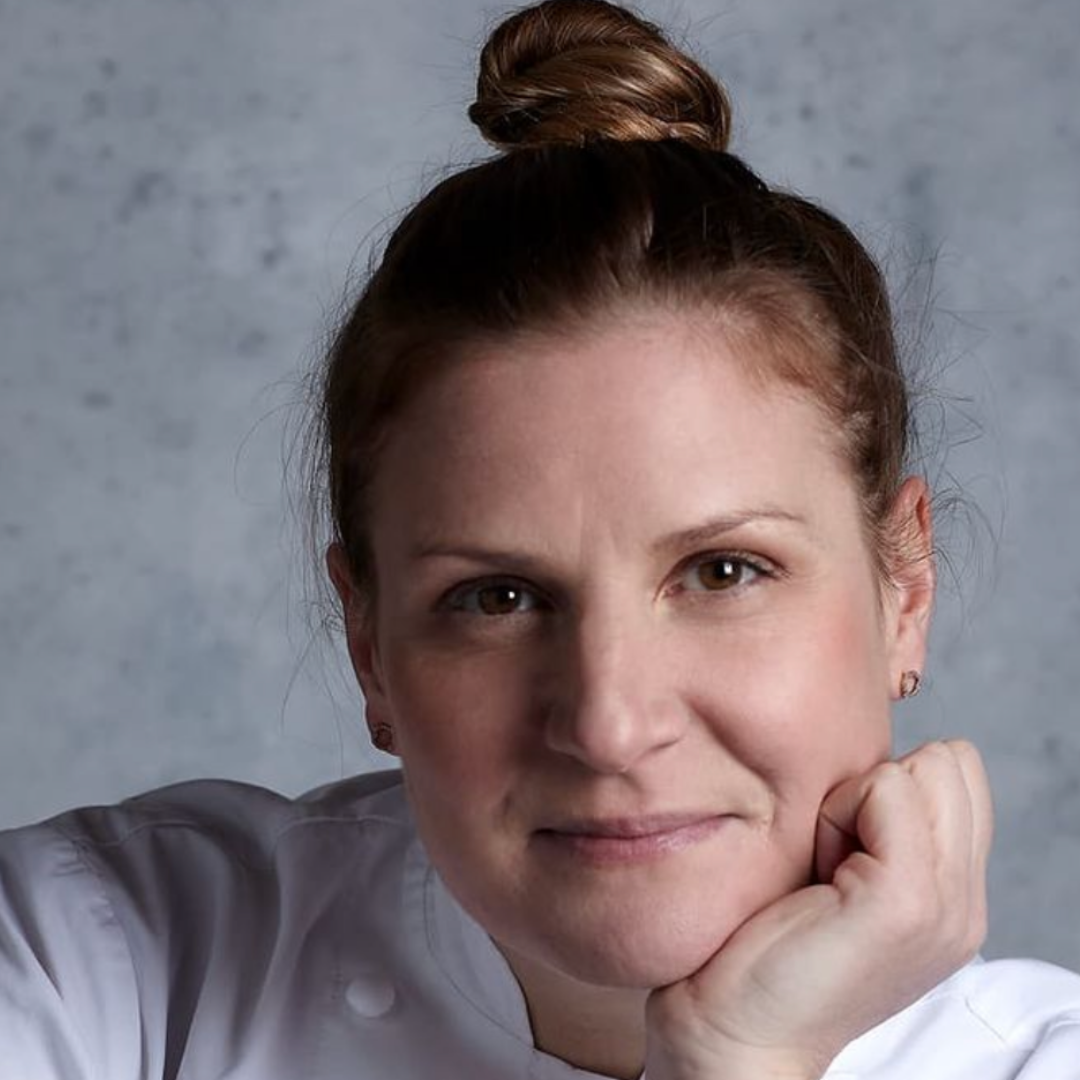
Reducing food waste is one of the biggest challenges in our food system and finding ways to waste less and value ingredients more is essential.
At Apricity, chef and restaurateur Chantelle Nicholson has built her career around that principle. Founder of the Michelin Green Star restaurant Apricity and author of Planted, Nicholson is known for championing sustainable cooking and low-waste kitchens.
Now a Chefs in Schools ambassador, she joined our co-founder Nicole Pisani to talk about sustainability in school kitchens, from root-to-stem cooking to plant-forward menus and practical ways to reduce food waste without stretching already tight budgets.
Nicole: Why did you become a Chefs in Schools ambassador?
Chantelle: “I truly believe quality food for children is where it all begins. There’s a disconnect in the UK between where food comes from and what ‘good’ food actually means. Chefs in Schools bridges that gap.
“Schools don’t always have the resource to do that alone, to teach children what food does for your body, where it’s grown, and how it can be delicious. If we want longevity in healthy eating habits, that understanding has to start young.”
discover more news and insights
Nicole: Why is root-to-stem cooking important for schools?
Chantelle: “It’s about using the whole ingredient, whether that’s beetroot leaves or cuts like livers and hearts. Not only does it help with budget and nutrition, it reduces waste.
“When you throw something in the bin, you’re not just wasting food. You’re overlooking the growers, the drivers, the prep chefs, everyone involved in getting that ingredient to your plate.”
For Chantelle, it’s also about respect. Helping children understand that cauliflower leaves can go into a salad or beetroot leaves into pasta reframes what counts as ‘edible’ and builds appreciation for the journey behind every meal.
Nicole: Can plant-forward menus work at scale in school kitchens?
Chantelle: “We need more plants in our diets. Pulses and grains are affordable, high in fibre and incredibly nutritious.
“It doesn’t have to be all or nothing. I’m a big believer in ‘half-and-half’. We’ve done dishes that are 50% venison and 50% lentils, and the flavour actually improves because you’re layering it.”
Nicole: How do you source locally on a budget?
Chantelle: “People often say local is more expensive, but seasonal produce that hasn’t travelled far often lasts longer. That extends its value.
“Even in supermarkets, you can start by reading labels and being curious. If I see something’s travelled thousands of miles, I’ll rethink what I’m cooking. It might just mean buying sprouts in winter instead of asparagus flown in from Peru.”
Nicole: One thing school kitchens could do tomorrow to reduce waste?
Chantelle: “Pause before something goes in the bin and ask: can this have a second life? Citrus peel can be infused before it’s discarded. Vegetable trimmings can bulk out a dish or become stock.
“Nothing should go in the bin until you’ve really extracted everything you can from it.”